



How Thomas Jefferson's Macaroni Machine Revolutionized Pasta Making in America
Usually remembered for his contributions to American political philosophy and government, Thomas Jefferson was accomplished in fields as diverse as architecture, agriculture, and the culinary arts – including the ingenious macaroni production line which helped bring the European pasta tradition to America.
After completing his service as ambassador to France, Jefferson concocted and perhaps even built a macaroni machine. His macaroni machine’s arrival in America wasn’t simply a novelty; it was the acculturation of European foodways to American appreciation for ingenuity and industry. Jefferson’s macaroni machine was essential in the spread of pasta, especially macaroni, that became a dietary staple in America.
It’s also a story about Jefferson’s broader influence on US society. His adoption of a macaroni production line fits into his larger celebration of the industrial arts, an appreciation for progress in mundane and everyday life. The first section explains how and why Jefferson came to be associated with the macaroni machine in the first place. It also delves into his status as an inventor, and how his culinary interests shaped US eating habits.
Thomas Jefferson and His Love for Pasta
For instance, Thomas Jefferson acquired the taste for pasta when he was American Minister to France (1784-89). His travels throughout Europe, as well as in France and Italy, showed him a food world that paled in comparison with the sturdy stews and roasts like Boston baked beans, cornmeal cakes and peppered beef that he had grown up eating in his native time in Virginia. Jefferson’s European expeditions were as much culinary tours of the continent’s cognitive arts as they were diplomatic missions, and his observations informed a gastronomic journal he started keeping upon his return to the US.
He encountered pasta in many forms for the first time in France and Italy, an item that usually appeared only in the most upscale restaurants back in America. For reasons I’ll explain in a moment, he described it all in precise detail back home, noting especially the different shapes, sizes and textures of macaroni – a label that in the English of the time covered all pasta. Jefferson was a memorising natural, attentive to everything novel and efficient.
Jefferson’s efforts to bring pasta recipes and machines to the US were efforts to replicate sophisticated European dining experiences in America. He drew pasta machines, wrote extensively about processes and mechanisms that he observed, and then sent a macaroni machine back home to America, believing that a device could simplify the process of macaroni production.
Pasta and pasta-making implements had helped diversify and refine American cooking. Jefferson’s pasta introduction – and his broader career as an experimenter of tastes and traveller between worlds – demonstrate the expansion of his interests beyond politics into the very practical realm of making everyday life better through going out and experiencing all the world has to offer.
The Invention of the Macaroni Machine
This good-humoured reference refers to Thomas Jefferson’s macaroni machine, and suggests that not only was Jefferson an inventor and a mechanical genius, but that the machine is a metaphor for him – for his grubbing into the past and his desire to improve the functionality of everyday existence.
Design and Function of the Macaroni Machine
This was a macaroni machine that Jefferson imagined for himself. It was to be a setup that would automate the process of making pasta – typically macaroni – by a system that extruded the dough through shaped dies. It was a labour-intensive andskillful process, but Jefferson tried to replace it with human work and skill by mechanising it.
Jefferson's Adaptation and Design Contributions
It is unclear whether Jefferson designed the machine from scratch or simply modified existing designs he saw in Europe. Apparently, during his time in Italy, Jefferson fell in love with semi-industrial pasta-making techniques, which he can back home, adapting them for US conditions. He took notes and made drawings. Jefferson’s notes and drawings likely informed the design of his own version of a macaroni production line.
Technological Insights
Its technology was rudimentary by today’s standards but it was revolutionary for the time because it utilised simple mechanical principles such as compression and extrusion, powered by manual or simple machinery, to remove some of the labour from production. Dough was prepared, fed into the machine and pushed through a die that turned it into macaroni, making pasta more consistent and of higher quality.
Jefferson’s macaroni machine reveals a similar recognition of the ‘slings and arrows’ of mundane everyday tasks – in this case, the preparation of food – and a desire to help by finding economical and practical ways of overcoming mere obstacles. His approach was systematic and scientific, with implications that reflect this thinker’s wider methodical intellectual curiosity and application of Western modernity’s hallmarks of rectitude, improvement and general efficacy.
This device would encourage the culinary creativity that was to become a hallmark of 18th-century eating – but it was also a sign of a new epoch of industrialising food production that was to characterise the centuries to come.
Impact on American Cuisine
Thomas Jefferson’s introduction of the macaroni machine to the United States changed the nation’s domestic dietary habits and culinary culture even more significantly, ushering in not just a new incidence of a food item but also the transformation of a broader adoption of European culinary habits in US homes.
Influencing American Dining Habits
Pasta, and particularly the macaroni that made its way to the US, Forbes said, consolidated the foodie revolution Jefferson set off in the nascent United States by advancing greater culinary variation. Before the US had standardised mass-market platforms related to food, such as Jefferson’s macaroni machine, Americans ate according to British influence. British diets, unlike those of the Mediterranean (which included pasta), are much more conqueror-focused than the ideals of healthy minimalism attached to Mediterranean cuisine. Jefferson’s catalysation of the pasta movement introduced a new, highly adaptable ingredient to the US diet: an ingredient also well-suited for large-scale, sustainable agricultural production. Pastas blended in easily with US diets and quickly became a popular staple for good reason.
Acceptance and Adaptation in American Kitchens
Once a machine for making pasta became available, it was much easier for it to be adopted on a large scale, both at home and in restaurants. Pasta was first consumed in the US as a foreign novelty, but later became a regular staple of the larder, thanks to the macaroni machine. In this way, the macaroni machine could demystify the pasta-making process for ordinary people, leading to its wider consumption.
Popularizing Macaroni and Cheese
Probably the most lasting outcome of Jefferson’s invention of the macaroni machine was the ubiquity of macaroni and cheese in the US. Even if the ingenious Twining device had not been invented, macaroni and cheese was common all over Europe and macaroni was on its way to circulating globally. Jefferson’s macaroni and cheese, served at the head table of a state dinner, was among the first appearances of the dish on such a glittering American stage. But his version was that rare cook’s gem that meshed European technique with New World palates and tastes. It was a culinary souvenir that can pass as home cooking and has become quite the comfort food.
Jefferson’s macaroni assembly line made novel foods available, but this emerging corporate cooking – with the use of complex boilers and long ranges – also reimagined the role of cooks andrpc cooks in the US. This corporation of food innovation encouraged culinary experimentation with foreign ingredients and techniques that presaged the quintessentially American melting pot of cuisines.
This culinary cross-fertilisation reaffirmed a broader ideal of American culture: a focus on innovation, an openness to influences from far and wide, an attitude that, as seen in cuisine and much else, would continue to define the US nation.
Conclusion
The story of Jefferson’s macaroni machine and why it mattered to American culinary history should help us to remember how much there is to be learned about Jefferson beyond the tohimself as a political giant, or a great architect. The fact that he cared about tracing the legume along which macaroni passed through the machine before landing in his intestines is just one of the many sides to his genius, which was curious and attentive to the world, but also intensely concerned with the practical improvements of everyday life.
Reflecting on Jefferson’s Broader Contributions
Jefferson developed his macaroni machine in part because he ‘foresaw’ what ‘the times would bring forth’, and he pursued it because of the ‘desirableness of perfecting the mode of life of the americans’. As this example indicates, Jefferson brought his heterogenous interests and inventive sensibilities well beyond the pages of his notebooks and plans. His taste for technological innovation controlled both large questions of statecraft and local practices of curiosity, and was indeed whole in the sense that it also took root in the very foods Americans ate. In Jefferson’s thinking about technology, flavour and cooking, the question of how to move forward was never simply literal.
Final Thoughts on Historical Impact
As Jefferson’s culinary history shows, the past has an outsized impact on daily life, even in unexpected ways. His unlikely Presentes – the pasta and macaroni machine – reveal how his experiments in hybridising European foodways with American innovation left his personal mark on the daily fare of the republic. We eat today because Jefferson wanted to eat then. And we still serve macaroni and cheese because he wanted to cook macaroni and cheese.
The lasting impact of the macaroni machine demonstrates that no matter how enclosed the universe of any particular figure in the past might be, its actions and fears might have consequences affecting strands of modern society that echo into the present and beyond. It is certainly a lesson for policymakers – and for the rest of us. Jefferson’s legacy in the foods he brought to the US might be unusual but it exemplifies the intersection of innovation, culture and time, and also embraces the more upbeat notion that exploration, discovery and the application of technology can enhance a people’s cultural palate.
By dint of his many interests and lasting experiments, the founding father has remained a character of consequence – not just in the political realm, but at the very bedrock of everyday life, including the dinner table.
FAQs: Common Questions About Macaroni Production Line
What is a Macaroni Production Line?
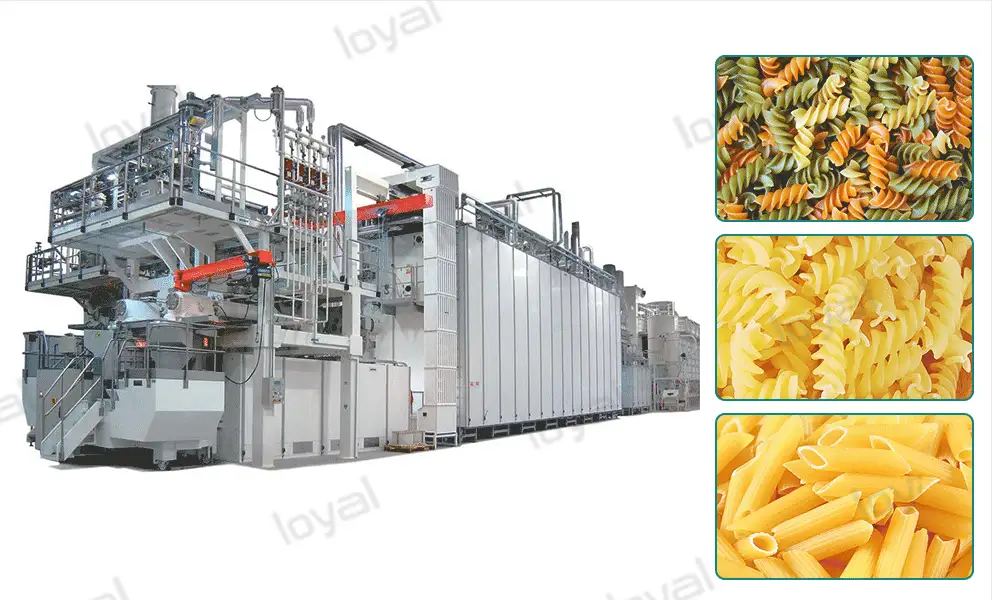
A macaroni production line is a set of machines and processes that automates the procedure of making macaroni pasta. It consists of steps that mix, knead and cook the dough and then extrudes, cuts and dries the pasta.
How Did Thomas Jefferson Contribute to the Development of Macaroni Production?
Thomas Jefferson didn’t invent the pasta production line, but he delivered us a critical step towards mechanical pasta production. While Jefferson’s enthusiasm for pasta-making never spread in the US or elsewhere, the mechanical entrepreneurs on both sides of the Atlantic experimented in the following decades, coming ever closer to the modern pasta production line.
What Are the Key Components of a Modern Macaroni Production Line?
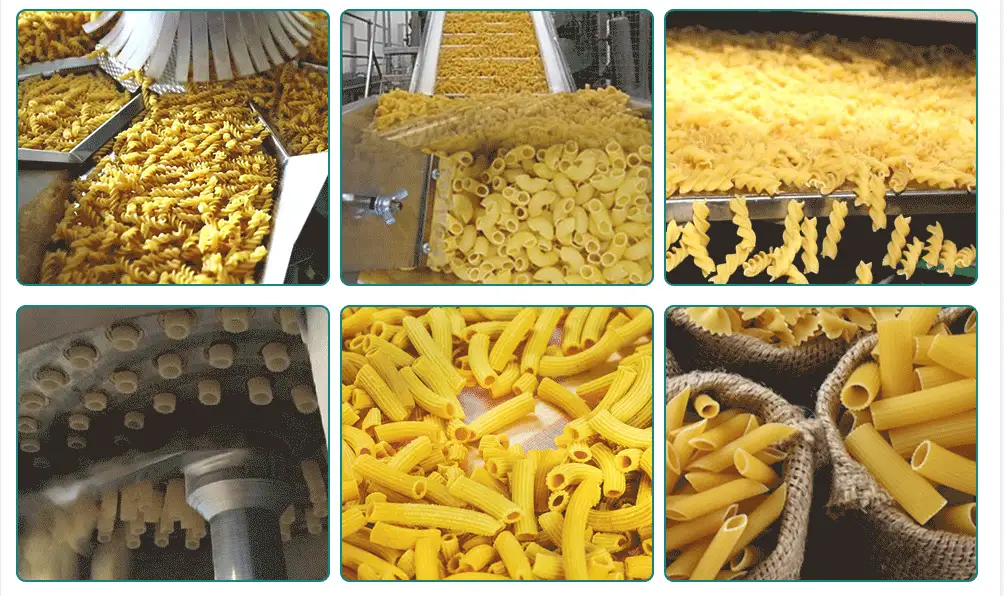
Mixers are used to blend the flour and water in these modern macaroni lines. An extruder is then used to form the dough; a cutting machine will follow, and the pieces will be dried to achieve a moisture content of roughly 10 or 11%, removing moisture so that the pasta can be boxed up.
How Has Pasta Production Technology Evolved Since Jefferson’s Time?
Given the huge strides that pasta-making technology has made since the time of Jefferson, industrial processes are now highly automated, enabling the production of enormous amounts of pasta at astonishing speeds. The industry’s modern machinery excels in the two most important steps: the extrusion of dough and its subsequent drying. It results in a wide array of imaginable pasta forms of uniformity and consistency.
Why is Macaroni Production Significant in Culinary History?
Macaroni production serves as a symbol of this gradual shift from hand-made (artisanal) pasta to a manufactured, industrial-scale product that would epitomise trends in the manufacturing and consumption of food more generally, ultimately facilitating pasta’s status as a dietary staple across the world.
This final section on ‘FAQs’ is an essay in 10 questions and answers that briefly and coherently examines some of the most common issues involving, and historical aspects of, the production of macaroni. Considered together, these provide a portrait of both the technical and cultural history of pasta production over time.