



Overseas Customer Visits Our Factory for a New Pasta Production Project
Recently, we had the pleasure of welcoming an overseas customer to our factory to discuss an ambitious new pasta production project. The customer brings years of extensive experience in both trade and industrial sectors, having already established a formidable business presence across various fields. Now, driven by surging market demand, they have made the strategic decision to launch their own food production enterprise and enter the competitive pasta market.
Even before arriving at our facility, the customer had already initiated preparations for their new factory and related infrastructure. This proactive approach underscores their meticulous planning and high level of confidence in the project's success. The primary objective of this visit was to finalize the details for a complete long pasta production line and to gain a comprehensive understanding of the end-to-end manufacturing process.
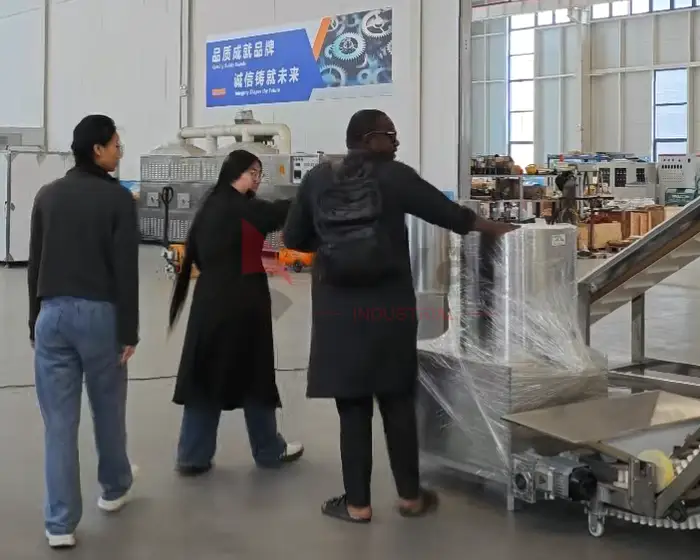
Precision Engineering for Long Pasta Production
The customer is specifically targeting the production of long pasta and arrived with clear specifications regarding production capacity and product dimensions. During our technical meetings, we engaged in detailed discussions covering machine configuration, process flow, factory layout, and the overall project timeline.
Our engineering team provided a step-by-step walkthrough of the entire pasta production sequence:
- Automated Mixing: Ensuring a consistent dough consistency.
- Vacuum Extrusion: Vital for maintaining product density and texture.
- Continuous Drying: The critical phase for structural integrity.
- Cooling and Packing: Preparing the final product for the retail market.
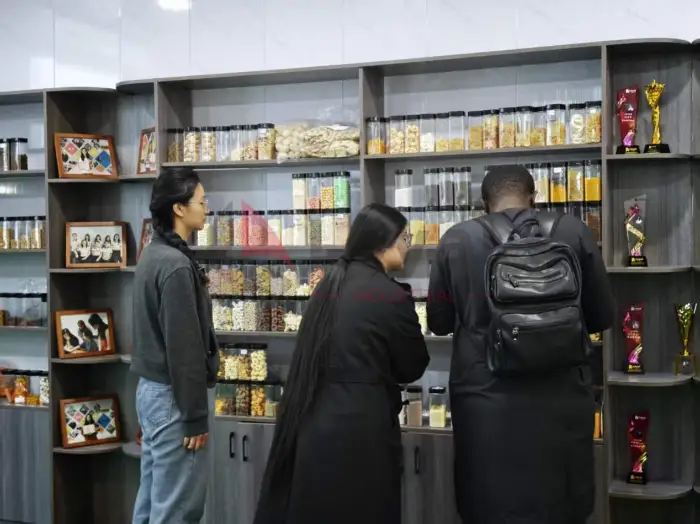
The Science of the Drying Process
The customer showed a particularly keen interest in the drying section. As any experienced producer knows, drying is perhaps the most critical stage in pasta manufacturing, as it directly determines the final product's quality, shelf life, and cooking performance.
To address their inquiries, our engineers provided a deep dive into the science of dehydration. We explained the nuances of drying cycles, including precise temperature fluctuations and humidity control strategies. We demonstrated how our equipment manages these variables to prevent cracking or "checking," ensuring that every strand of pasta achieves the perfect balance of flexibility and strength.
Strategic Planning and Factory Integration
To facilitate the customer’s transition from trading to manufacturing, we provided a customized layout drawing based on their specific machine configuration. This technical blueprint allows the customer to visualize the required factory footprint and optimize their construction planning. We believe that early-stage factory integration is essential to saving time and accelerating the project’s time-to-market.
Furthermore, we discussed the human element of the project—labor arrangements. Based on the high level of automation in our designs, our team shared practical insights into the optimal number of operators required for daily shifts. This data allows the customer to accurately forecast labor costs and streamline their future factory operations.
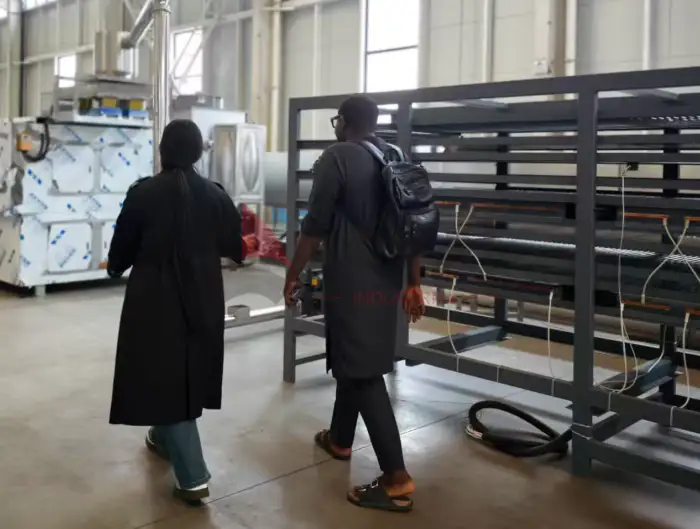
A Successful Partnership in the Making
Following the comprehensive factory tour and technical workshops, the customer expressed great satisfaction with our proposed solutions and a strong desire to move forward. Both parties reached a mutual understanding on the core business terms, and the project has now transitioned into the finalization phase.
This visit marks a significant milestone in the customer’s journey into the food industry and serves as another prime example of our commitment to supporting overseas pasta projects. We remain convinced that through transparent communication, robust technical support, and practical, scalable solutions, we can empower our customers to start production smoothly and achieve sustainable business growth.
We look forward to the next stage of this collaboration and to a long, successful partnership.